Kashyapa and his rock capital
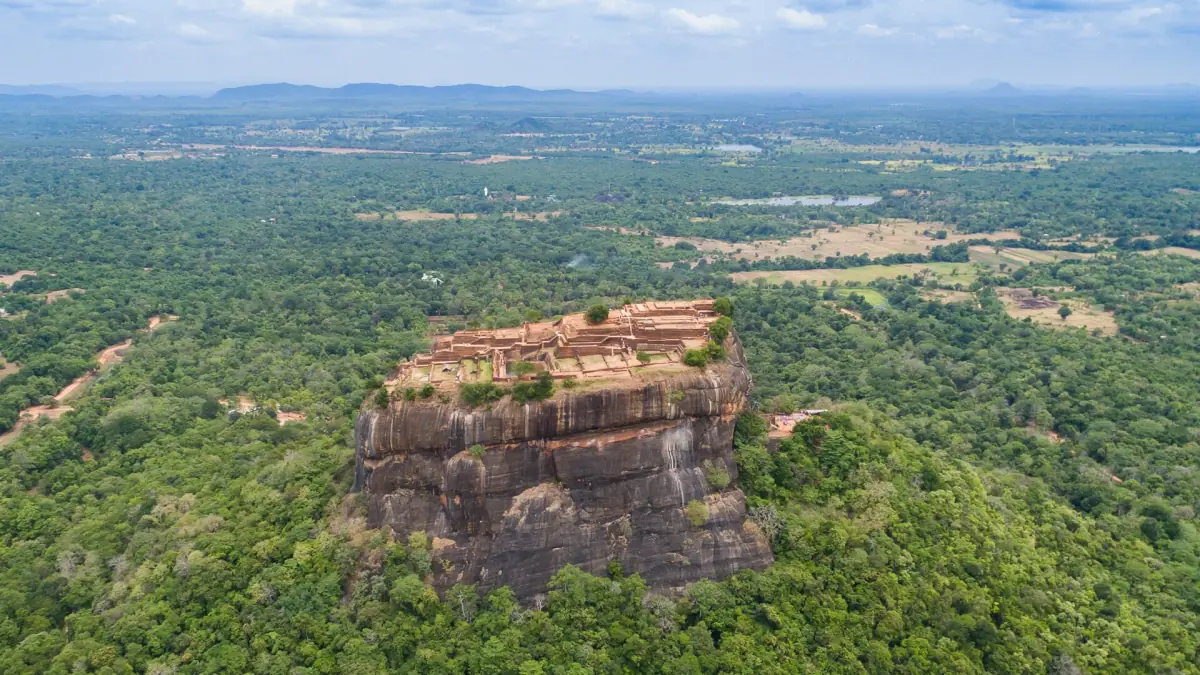
Sigiriya lies in the Matale district of Sri Lanka's Central Province. Its builder was King Kassapa I, also spelled Kashyapa or Kasyapa, who ruled from 477 to 495 AD. He made the rock the centre of his capital, with buildings around its foot and a palace on the summit.
The rock is a granite mass. It is about 180 m high by one description and 200 m above the surrounding plain by another, and both figures are used. Stories about how the king came to power and how he died exist in several versions. Not all details are proven by archaeology, so treat them as tradition.
Sigiriya through the centuries
From capital to monastery to World Heritage.
| Period | What happened | What you can see today |
|---|---|---|
| 477 to 495 AD | King Kassapa I builds the capital around the rock and on its summit | Gardens, Lion Gate remains, summit foundations |
| After Kashyapa's death | Buddhist monks use the site as a monastery until the 14th century | Ruins on the rock and in the gardens |
| 1982 | UNESCO lists the Ancient City of Sigiriya under criteria ii, iii and iv | The protected site and the museum |
Sigiriya tours with a guide
Guided visits and day trips to Sigiriya, with live prices and availability.
What the builders left
The main parts of the site.
The Lion Gate
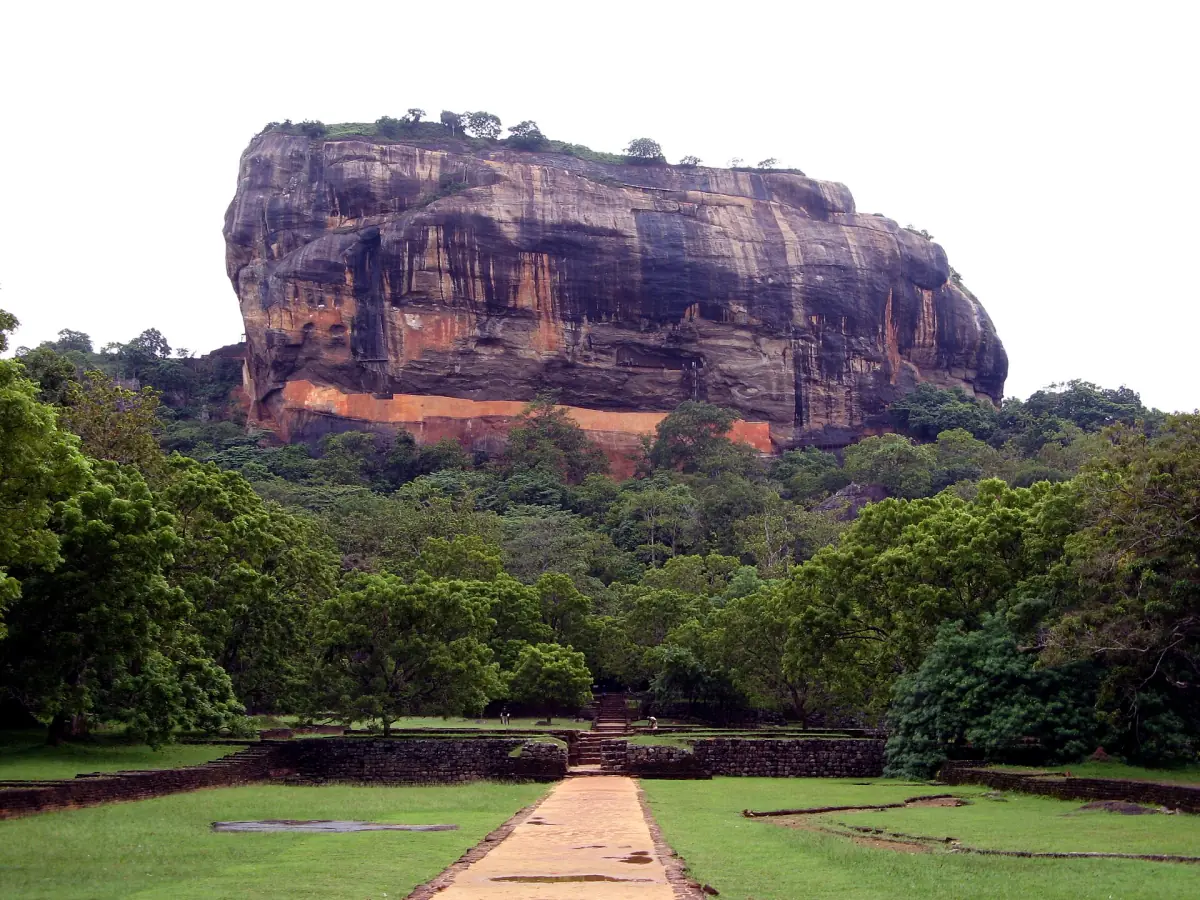
A huge lion made of brick and plaster once guarded the way up. The stairs led through its mouth. Today the giant paws remain, with the stairs above them.
Climbing Sigiriya →The gardens
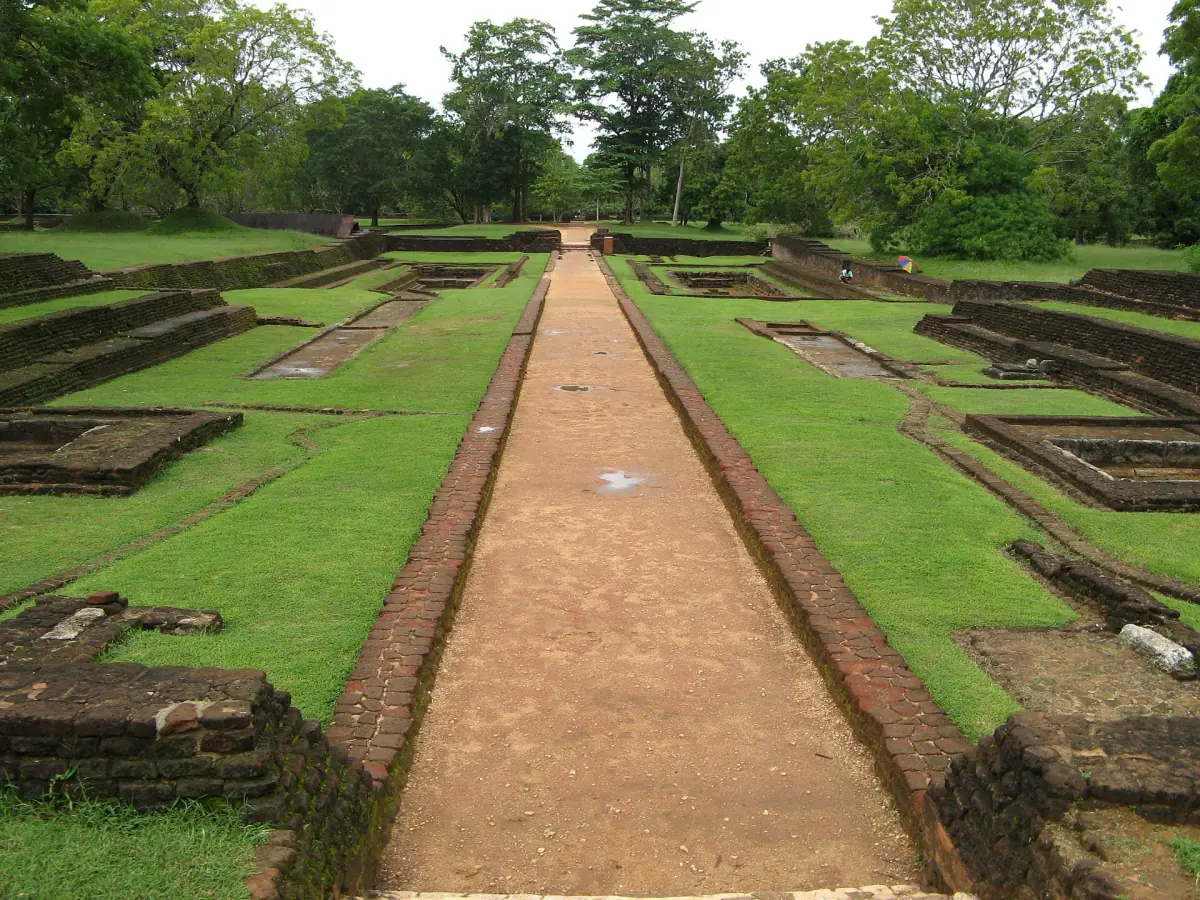
There are three types: water gardens with pools, channels and underground hydraulics, boulder gardens and terrace gardens. Some fountains work in the rainy season. Do not expect working fountains on a given day.
The summit palace
Mostly foundations and water basins remain at the top. The scale of the layout is what you see, more than standing walls.
Frescoes and Mirror Wall
The painted figures and the polished wall are on the way up. Photography is not allowed in the fresco gallery.
Frescoes and Mirror Wall →The museum
The Sigiriya museum is part of the full ticket of $35 (2026) and is also sold on its own for $6. It opens at 08:00, later than the site, so an early visit to the rock does not mean the museum is open.
Facts and numbers at a glance
The figures you will meet in descriptions of the site.
| Item | Value | Note |
|---|---|---|
| Builder | Kassapa I, also spelled Kashyapa or Kasyapa | Reigned 477 to 495 AD |
| Height of the rock | About 180 m or 200 m | Two descriptions; 200 m is measured above the surrounding plain |
| World Heritage listing | 1982 | Ancient City of Sigiriya, criteria ii, iii and iv |
| Use after the king | Buddhist monastery | Until the 14th century |
| Lion Gate | Brick and plaster lion | Giant paws remain; stairs went through the mouth |
| Full ticket | $35 | Price list of 14 October 2026, includes the museum |
Reading the site on the ground
How the history shows as you walk.
Start in the gardens
The water gardens come first on the way in. Pools and channels show how the builders moved water, and parts of the system lie underground. The gardens show the layout of the capital below the rock.
Think of the lion
When you reach the paws, imagine the whole animal. The stairs went through its mouth.
Look at the foundations at the top
The palace is mostly outlines and water basins. A good map or a guide helps to read them. Use the museum for background.
Keep the monastery in mind
A Buddhist monastery used the rock for centuries after the king. The site is not only a royal ruin.
Seeing Sigiriya in context
Other capitals and the view from outside.
Sigiriya belongs to the cultural triangle. Polonnaruwa became the second capital after Anuradhapura, and its ruins date from the 12th century. Anuradhapura was a religious and political capital with monasteries, palaces and monuments. See the page on the cultural triangle.
For a view that shows the whole shape of the rock, hike up Pidurangala. It does not replace the ruins and the frescoes on Sigiriya itself, but it shows how the site sits above the forest.
Visiting for the history
What to plan if the past is your reason to come.
Allow time
The ascent alone takes 1.5 to 2 hours. With the gardens and the museum, plan half a day. Details are on the page on climbing Sigiriya.
Consider a guide
The summit shows outlines more than walls, so a guide or a good map helps. Guided visits and day trips appear in the tour block on this page.
Add the other capitals
Polonnaruwa and Anuradhapura cost $30 each for a full ticket and $15 for a half ticket (2026). Both list opening hours of 07:00 to 17:00.
Sigiriya history: frequently asked questions
Who built Sigiriya?
King Kassapa I, also called Kashyapa, who reigned from 477 to 495 AD. He made the rock his capital.
Is Sigiriya a UNESCO World Heritage Site?
Yes. It was listed in 1982 as the Ancient City of Sigiriya, under criteria ii, iii and iv.
How high is Sigiriya?
The granite rock is about 180 m high by one description and 200 m above the surrounding plain by another. These are not heights above sea level.
What happened to Sigiriya after Kashyapa?
After his death the site served as a Buddhist monastery until the 14th century.
Was Sigiriya a fortress or a palace?
It was a royal capital with a palace on the summit and gardens and buildings around the rock. The site is also known as the Sigiriya Rock Fortress.